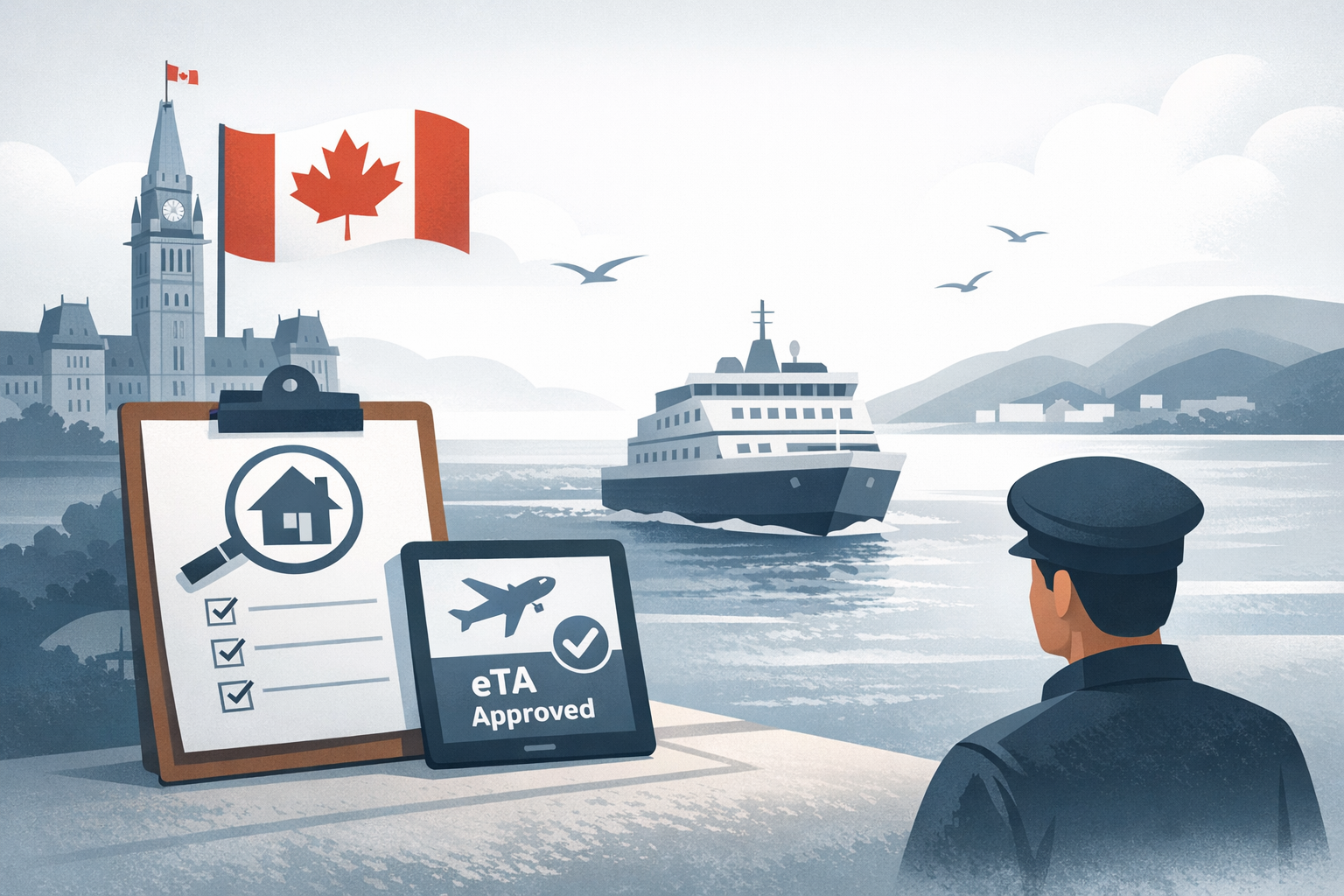
Canada now requires an eTA for visa‑exempt foreign nationals arriving by vessel directly from Saint‑Pierre‑et‑Miquelon, while existing air‑mode eTA exemptions remain in force. Exemptions cover large cruise ships (100+ overnight passengers) and vessel crew, but some nationals eligible for eTA by air will still need a visa if arriving by vessel.
Soheil Hosseini
June 5, 2026
Jurisdiction
Federal
Week
Week 23
Impact
Low
Programs Affected
Canada extends eTA to visa‑exempt travellers arriving by vessel from Saint‑Pierre‑et‑Miquelon, with cruise and crew exemptions
Date: 2026-06-05 | Source: IRCC (Program Delivery Update)
Summary: Canada now requires an electronic travel authorization (eTA) for visa‑exempt foreign nationals arriving by vessel directly from Saint‑Pierre‑et‑Miquelon, with specific exemptions for large cruise ships and vessel crew. Existing air‑mode eTA exemptions remain in force. Citizens of select visa‑required countries who can use eTA by air will still need a visa if arriving by vessel from Saint‑Pierre‑et‑Miquelon. Canada has introduced a targeted expansion of its electronic travel authorization regime to cover marine arrivals directly from Saint‑Pierre‑et‑Miquelon. This marks the first application of eTA beyond air travel for visa‑exempt foreign nationals. According to IRCC, travellers who are visa‑exempt must obtain an eTA via the existing online form before arriving by vessel; those holding a valid eTA do not need a new one for this route. Key provisions
- Who is affected: Visa‑exempt foreign nationals travelling by vessel directly from Saint‑Pierre‑et‑Miquelon to Canada.
- New marine‑mode exemptions:
- Cruise ships: Vessels with overnight accommodations for at least 100 passengers (excluding crew) are exempt when entering directly from Saint‑Pierre‑et‑Miquelon.
- Vessel crew: Crew members entering and remaining in Canada solely as crew of the same or another vessel are exempt.
- Existing air‑mode eTA exemptions maintained, including:
- U.S. citizens and U.S. lawful permanent residents.
- Citizens of France residing in Saint‑Pierre‑et‑Miquelon entering Canada directly from there.
- Contiguous territory exemption: Foreign nationals with status in Canada re‑entering within their authorized stay after a visit solely to Saint‑Pierre‑et‑Miquelon.
- eTA eligibility limits: Citizens of select visa‑required countries who are eligible for eTA by air will still require a visa if arriving by vessel directly from Saint‑Pierre‑et‑Miquelon. Program affected
- TRV (Temporary Resident Visa) and eTA screening for visa‑exempt travellers in marine mode Independent analysis
- Positive impacts:
- Enhanced pre‑arrival screening for marine entrants aligns marine and air security practices and may reduce inadmissibility issues at ports.
- Clear carve‑outs for large cruise operations and crew help maintain commercial and tourism fluidity.
- Potential challenges:
- Mode‑dependent rules (eTA allowed by air but not by vessel for some nationals) may cause confusion and last‑minute travel disruptions for small craft or ferry passengers.
- Operational adjustments for carriers and ports may be needed to verify eTA compliance, particularly outside major cruise operations.
- Practical takeaway:
- Visa‑exempt travellers planning marine travel from Saint‑Pierre‑et‑Miquelon should secure eTA approval in advance, confirm any applicable exemption, and ensure their authorized stay in Canada remains valid if relying on the contiguous territory exemption. Closing
This IRCC update formalizes marine‑mode eTA screening for a narrow corridor while preserving key exemptions to minimize disruption. Stakeholders—travellers, carriers, and tourism operators—should update compliance checks immediately to reflect the 2026-06-05 policy change.
Tags: Canada immigration, IRCC, eTA, marine arrivals, Saint-Pierre-et-Miquelon, cruise ship exemption, crew exemption, TRV, visa-exempt travellers, contiguous territory exemption, Canadian border policy, 2026 immigration update
Categories
Share This Post
Stay Updated with Immigration News
Get the latest updates on Express Entry draws, OINP invitations, policy changes, and more delivered to your inbox.
We respect your privacy. Unsubscribe at any time.
Related Articles

NOC 33102 Institutional Only
OINP confirms NOC 33102 applies only to nurse-aide roles primarily performed in institutional settings (hospitals, nursing homes, assisted-care and other health establishments); home-based care must be classified as NOC 44101. Employers and applicants should update job offers, contracts and postings to the correct NOC to avoid application delays or refusals.

FMCSP Renewal Rules
On 2026-09-24 IRCC updated the Francophone Minority Communities Student Pilot, adding financial requirements for study‑permit renewals and explicitly accepting valid LOAs or other proof of continued enrolment. The guidance also clarifies extension rules for accompanying family members and confirms participants retain FMCSP designation while meeting eligibility.

90-Day Grace Period
IRCC extends concurrent processing grace period for eligible in‑Canada LMIA‑dependent work‑permit extension applications from 60 to 90 days, holding applications without decision to allow a pending LMIA (and CAQ, if required) to be issued. A new client flagging process (use tracking code CPTS2026 in the intended occupation) identifies files for concurrent processing; eligibility hinges on permit expiry window, timely LMIA filing, and LMIA validity.

IRCC A70 Guidance
IRCC standardized and reorganized R207 – A70 guidance for in‑Canada PR applicants under the International Mobility Program—new landing page, clarified instructions and consistent format. Affects protected persons, family members and H&C applicants; procedural/formatting update only, no substantive eligibility changes.