
IRCC has temporarily paused intake of refugee sponsorship applications from Groups of Five and Community Sponsors under the Private Sponsorship of Refugees program (program delivery update posted 2026-06-16). The PDI gives internal processing guidance but no timeline or exemptions; stakeholders should monitor IRCC for reopening details.
Soheil Hosseini
June 16, 2026
Jurisdiction
Federal
Week
Week 25
Impact
Moderate
Programs Affected
IRCC temporarily pauses intake of refugee sponsorship applications from Groups of Five and Community Sponsors
Summary: Immigration, Refugees and Citizenship Canada (IRCC) has announced a temporary pause on the intake of refugee sponsorship applications from Groups of Five (G5) and Community Sponsors (CS) under the Private Sponsorship of Refugees (PSR) program, according to a program delivery update published on 2026-06-16. The update provides internal guidance to staff on processing in relation to the pause. Key points:
- Date of update: 2026-06-16
- Source: IRCC (Program Delivery Update)
- Program affected: Refugees — Private Sponsorship of Refugees (PSR)
- Measure: Temporary intake pause for applications from G5 and CS The program delivery instruction (PDI), posted as a courtesy to stakeholders, outlines IRCC staff procedures connected to the intake pause for G5 and CS streams within the PSR program. While the update confirms the pause, detailed operational specifics (such as timelines, scope beyond intake, or exemptions) were not provided in the excerpt. Independent analysis:
- Potential positives:
- May help IRCC manage inventories and workflows, supporting more predictable processing for existing caseloads.
- Could allow the department to adjust policies or capacity before reopening intake, improving program integrity and planning.
- Potential negatives:
- Community-led resettlement efforts may face short-term disruption, affecting sponsorship planning and fundraising by grassroots groups.
- Could slow the pipeline of privately sponsored refugee arrivals via G5 and CS, increasing reliance on other pathways until intake resumes.
- Uncertainty over pause duration may complicate expectations for prospective sponsors and applicants. Outlook:
IRCC’s posting signals an administrative measure focused on intake control and internal processing guidance. Stakeholders should monitor official IRCC communications for reopening timelines, scope clarifications, and any transitional provisions referenced in the full PDI.
Tags: IRCC, Private Sponsorship of Refugees, PSR, Groups of Five, Community Sponsors, Refugees, Canada Immigration, Program Delivery Update, Immigration Policy, Resettlement Date: 2026-06-16
Source: IRCC
Categories
Share This Post
Stay Updated with Immigration News
Get the latest updates on Express Entry draws, OINP invitations, policy changes, and more delivered to your inbox.
We respect your privacy. Unsubscribe at any time.
Related Articles
90-Day Grace Period
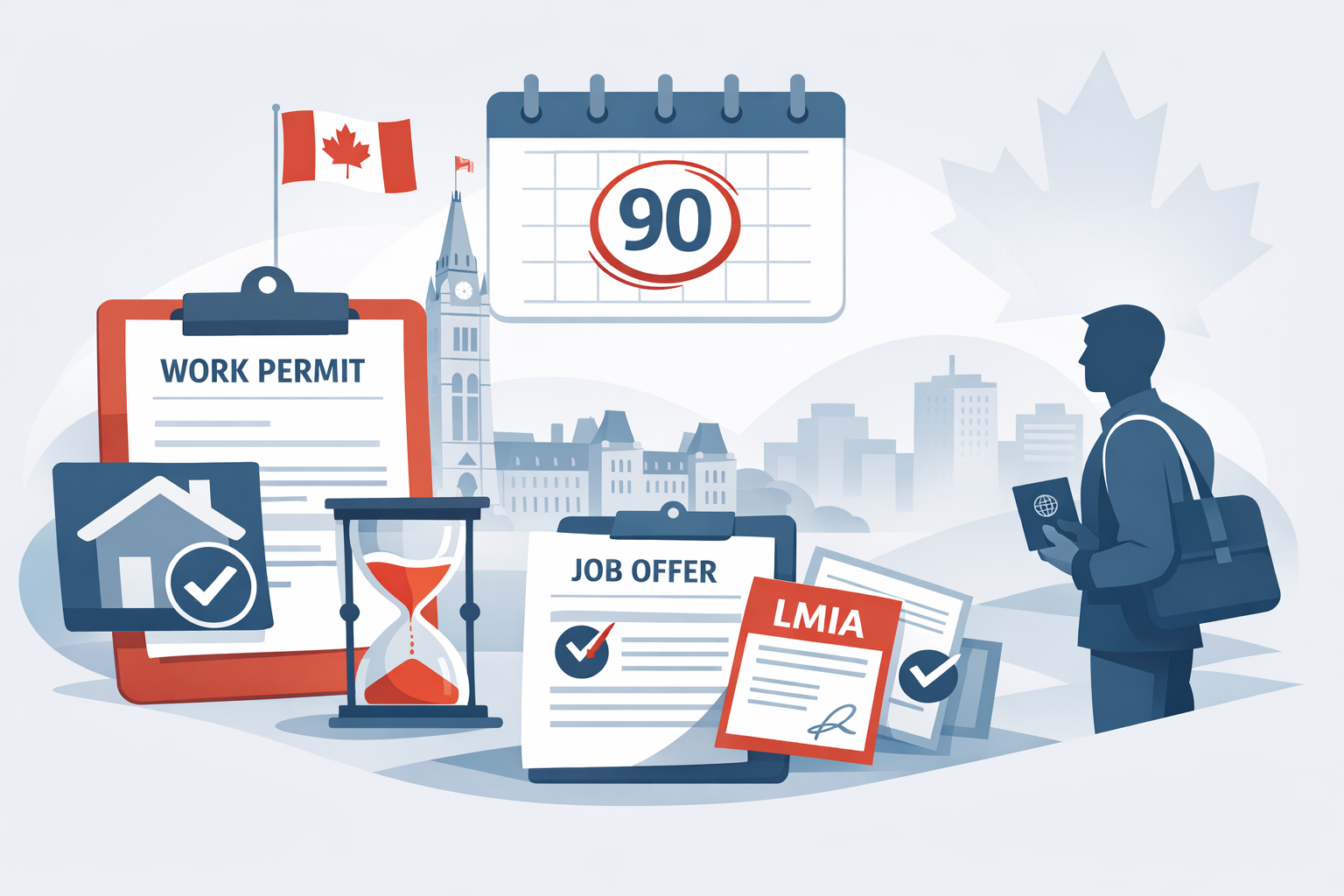
IRCC extends concurrent processing grace period for eligible in‑Canada LMIA‑dependent work‑permit extension applications from 60 to 90 days, holding applications without decision to allow a pending LMIA (and CAQ, if required) to be issued. A new client flagging process (use tracking code CPTS2026 in the intended occupation) identifies files for concurrent processing; eligibility hinges on permit expiry window, timely LMIA filing, and LMIA validity.

IRCC A70 Guidance
IRCC standardized and reorganized R207 – A70 guidance for in‑Canada PR applicants under the International Mobility Program—new landing page, clarified instructions and consistent format. Affects protected persons, family members and H&C applicants; procedural/formatting update only, no substantive eligibility changes.

Employer Inspection Guidance
IRCC reissued and broadened COVID-era employer inspection guidance to apply under the Emergencies Act and Quarantine Act for International Mobility Program employers, clarifying inspection triggers, timelines, and a six‑year document retention requirement. It affirms employers must pay wages during mandated quarantine, allows telework where feasible, but does not require employers to cover quarantine accommodation costs.

Passport Renewal Online
Eligible Canadians can renew their own passport online from within Canada if it expires within six months (or is already expired), keep the same personal details, and meet standard renewal rules; the digital photo must be taken in person by a commercial photographer and be no more than six months old. Processing takes up to 20 business days plus mailing, the new passport will be mailed to a Canadian address, and the current passport is cancelled once the application is submitted.