
Canada will cap federally funded settlement service access for economic immigrants at 6 years starting April 1, 2026, and 5 years from April 1, 2027. The phased limits apply to current and new economic-class PRs—including Express Entry and provincial nominee streams—and aim to target earlier uptake while easing long-term program pressure.
Soheil Hosseini
March 11, 2026
Jurisdiction
Federal
Week
Week 11
Impact
Moderate
Programs Affected
Canada caps settlement service access for economic immigrants to 6 years from April 1, 2026 and 5 years from April 1, 2027
Summary: Canada will phase in time limits on federally funded settlement services for economic immigrants—6 years from 2026-04-01, dropping to 5 years from 2027-04-01—applying to both current and new permanent residents in affected economic streams. Source: IRCC. Update date: 2026-03-11. Ottawa—Canada is tightening eligibility windows for federally funded settlement services for economic immigrants to align with Budget 2025 and manage immigration at sustainable levels while supporting labour market needs. Effective 2026-04-01, eligible economic immigrants will be able to access services for up to 6 years after obtaining permanent residence. From 2027-04-01, access will be capped at 5 years. The cap applies to current and new economic class permanent residents, including principal applicants and their accompanying spouses and dependents. Until now, access was permitted any time after becoming a permanent resident and before citizenship. IRCC maintains that settlement services—such as employment supports, language training, and community integration—remain available to help newcomers overcome barriers and contribute economically and socially.
Programs affected: Express Entry (EE-FSW, EE-FST, EE-CEC, EE-PNP) and provincial nominee streams including OINP (e.g., Job Offer and EE categories), BCPNP, and SINP. Analysis and potential impacts:
- Positive: Earlier uptake and more efficient allocation of settlement resources; potential reduction in long-term program pressures and wait times for recent arrivals who need services most.
- Negative: Reduced support horizon may affect those with slower integration trajectories (e.g., workers facing credentialing or sectoral downturns); possible retroactive impact on current PRs who planned to access services later; service providers may face front-loaded demand near the cut-off dates.
- Considerations: Provinces/municipalities and employers may need to bridge support gaps beyond the federal window to sustain long-term integration outcomes.
Closing: While the Settlement program continues to underpin newcomer integration, the phased caps signal a policy shift toward targeted, time-limited support, with outcomes hinging on early access, program capacity, and complementary provincial and employer initiatives.
Tags: IRCC, Canada immigration, settlement services, economic immigrants, Express Entry, Provincial Nominee Program, OINP, BCPNP, SINP, Budget 2025, permanent residence, integration policy, Ottawa, policy update, 2026-03-11
Categories
Share This Post
Stay Updated with Immigration News
Get the latest updates on Express Entry draws, OINP invitations, policy changes, and more delivered to your inbox.
We respect your privacy. Unsubscribe at any time.
Related Articles

Express Entry Overhaul
Effective Nov 3, 2026 Express Entry will award up to 150 CRS points for designated high‑wage Canadian experience and up to 100 CRS points for qualifying LMIA‑free job offers. IRCC will pause draws up to two weeks for profile recalculation, use an occupation‑based high‑wage list, and retain strict job‑offer genuineness checks.

IRCC genuineness guidance
IRCC requires officers to assess genuineness of LMIA‑exempt employer‑specific work‑permit offers under R200/R209.11—refusal is mandatory if any of four factors (active engagement, need, ability to fulfill terms, legal compliance) fail; open work permits are excluded. Employers must submit complete offers via the Employer Portal and may be contacted directly; CBSA conducts genuineness checks at POE and extrinsic adverse info triggers procedural fairness.
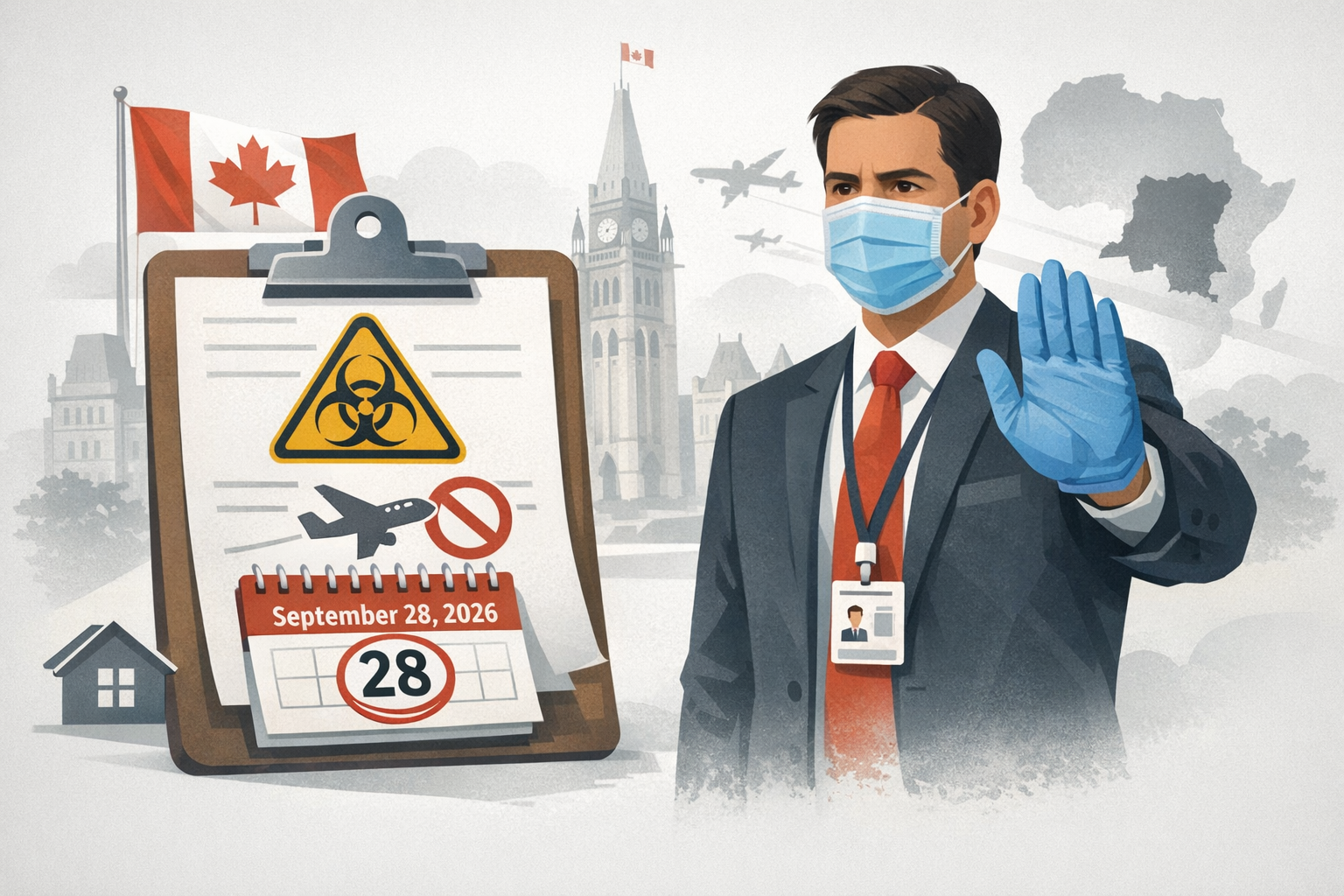
Canada extends Ebola measures
Canada extended Ebola travel measures to Sept. 28, 2026; effective July 20, 2026, foreign nationals who were in the DRC within the previous 21 days cannot board flights to Canada. Affects TRV, Work Permit and Study Permit travellers and may disrupt travel, enrolment and onboarding timelines.

Palestinian Open Work Permits
Canada launches a temporary public policy (Aug 1, 2026–Dec 30, 2027) allowing Palestinians and eligible family members in Canada to apply for or extend open work permits (one-time extension). Policy is in-Canada only, excludes temporary resident permit holders, requires valid temporary status, standard fees apply—use IRCC’s online tool and apply promptly.