
IRCC has revised and extended a temporary public policy (effective 2026‑03‑01 to 2027‑03‑31) allowing Iranian nationals in Canada to renew existing work permits in‑Canada with standard fees and biometrics. Eligibility is limited to work permits issued on or before 2025‑02‑28; one one‑time extension (up to 2 years) is allowed, applicants must be in Canada at decision and cannot apply at ports of entry.
Soheil Hosseini
March 5, 2026
Jurisdiction
Federal
Week
Week 10
Impact
Moderate
Programs Affected
IRCC extends and overhauls temporary policy, issues operational manual to ease work‑permit renewals for Iranian nationals
Summary: IRCC has revised and extended its temporary public policy for Iranian nationals in Canada, preserving in‑Canada facilitation for renewing existing work permits while tightening eligibility to those whose permits were issued on or before 2025‑02‑28. The updated operational guidance took effect 2026‑03‑01 and runs to 2027‑03‑31, with standard fees and biometrics applying.
Date of update: 2026-03-05 | Source: IRCC (Operational Instructions and Guidelines) Immigration, Refugees and Citizenship Canada has issued updated operational guidance for a revised temporary public policy supporting Iranian nationals in Canada as temporary residents. The measures are effective 2026‑03‑01 and expire 2027‑03‑31, and focus on facilitating in‑Canada extensions of existing work permits. Key points
- Scope and timing: The policy applies to applications received on or after 2026‑03‑01 and sunsets 2027‑03‑31. Applications lodged between 2025‑03‑01 and 2026‑02‑28 remain under the prior special measures.
- Eligibility: Applicants must be Iranian nationals in Canada with valid temporary resident status who hold a valid work permit issued on or before 2025‑02‑28, apply in Canada under IRPR 201(1), and have not already received an extension under this policy.
- Place of application: No applications at ports of entry; applications must be made from within Canada.
- Residence and travel: Applicants must be in Canada at the time of decision. Short absences (about 1–2 weeks) may be accepted, but departure causes loss of temporary status; officers may seek proof of presence.
- Fees/biometrics: Standard application and biometric fees apply; biometrics are required unless a regular exemption applies.
- One‑time extension: Eligible applicants may receive only one extension under this policy. Validity may be issued for up to 2 years, limited by passport or biometric validity and officer discretion.
- Restoration: Those who fell out of status may pursue restoration under IRPR 182; however, if a new work permit was issued after 2025‑02‑28, they are not eligible for an extension under this policy.
- Open work permits and coding: Open extensions may be issued under IRPA s.25.2 with LMIA exemption code R01, Case Type 20, NOC 99999, and mandatory remarks noting issuance under the Iranian special measures. Occupational restrictions apply if no medical exam.
- Programs affected: Work permits are the focus. Holders seeking to extend visitor (TRV), study, or TRP status must use regular pathways and meet standard requirements. Context
Ottawa cites continuing instability in Iran following the 2022 protests after the death of Mahsa Amini as the basis for maintaining facilitative measures for those already working in Canada, while aligning processing with standard eligibility and admissibility rules. Analysis
- Positive impacts:
- Provides continuity of work authorization for Iranian nationals already contributing to Canada’s labour market, supporting worker stability and employer planning.
- Clear operational manual and GCMS coding should improve processing consistency and predictability.
- Defined end date (2027‑03‑31) offers a planning horizon for applicants and counsel.
- Limitations/risks:
- The cohort is narrowly confined to those with work permits issued on or before 2025‑02‑28; recent arrivals or those who restored status and received permits after that date are excluded.
- One‑time extension cap and continued fees/biometrics may limit accessibility for some.
- Requirement to be in Canada at decision could disrupt applicants with unavoidable travel; missteps risk refusals.
- No facilitation for extending visitor, study, or TRP status may create confusion among non‑worker temporary residents from Iran. Closing
IRCC’s update preserves a targeted, time‑limited pathway for Iranian nationals to maintain work authorization in Canada while reinforcing standard program integrity. Counsel should verify issuance dates, status continuity, and travel plans to avoid ineligibility under the one‑time extension window.
Tags: IRCC, Canada immigration, Iranian nationals, work permits, open work permit, A25.2 public policy, GCMS R01, temporary resident status, biometrics, 2026 immigration updates, policy expiry 2027-03-31
Categories
Share This Post
Stay Updated with Immigration News
Get the latest updates on Express Entry draws, OINP invitations, policy changes, and more delivered to your inbox.
We respect your privacy. Unsubscribe at any time.
Related Articles

Express Entry Overhaul
Effective Nov 3, 2026 Express Entry will award up to 150 CRS points for designated high‑wage Canadian experience and up to 100 CRS points for qualifying LMIA‑free job offers. IRCC will pause draws up to two weeks for profile recalculation, use an occupation‑based high‑wage list, and retain strict job‑offer genuineness checks.

IRCC genuineness guidance
IRCC requires officers to assess genuineness of LMIA‑exempt employer‑specific work‑permit offers under R200/R209.11—refusal is mandatory if any of four factors (active engagement, need, ability to fulfill terms, legal compliance) fail; open work permits are excluded. Employers must submit complete offers via the Employer Portal and may be contacted directly; CBSA conducts genuineness checks at POE and extrinsic adverse info triggers procedural fairness.
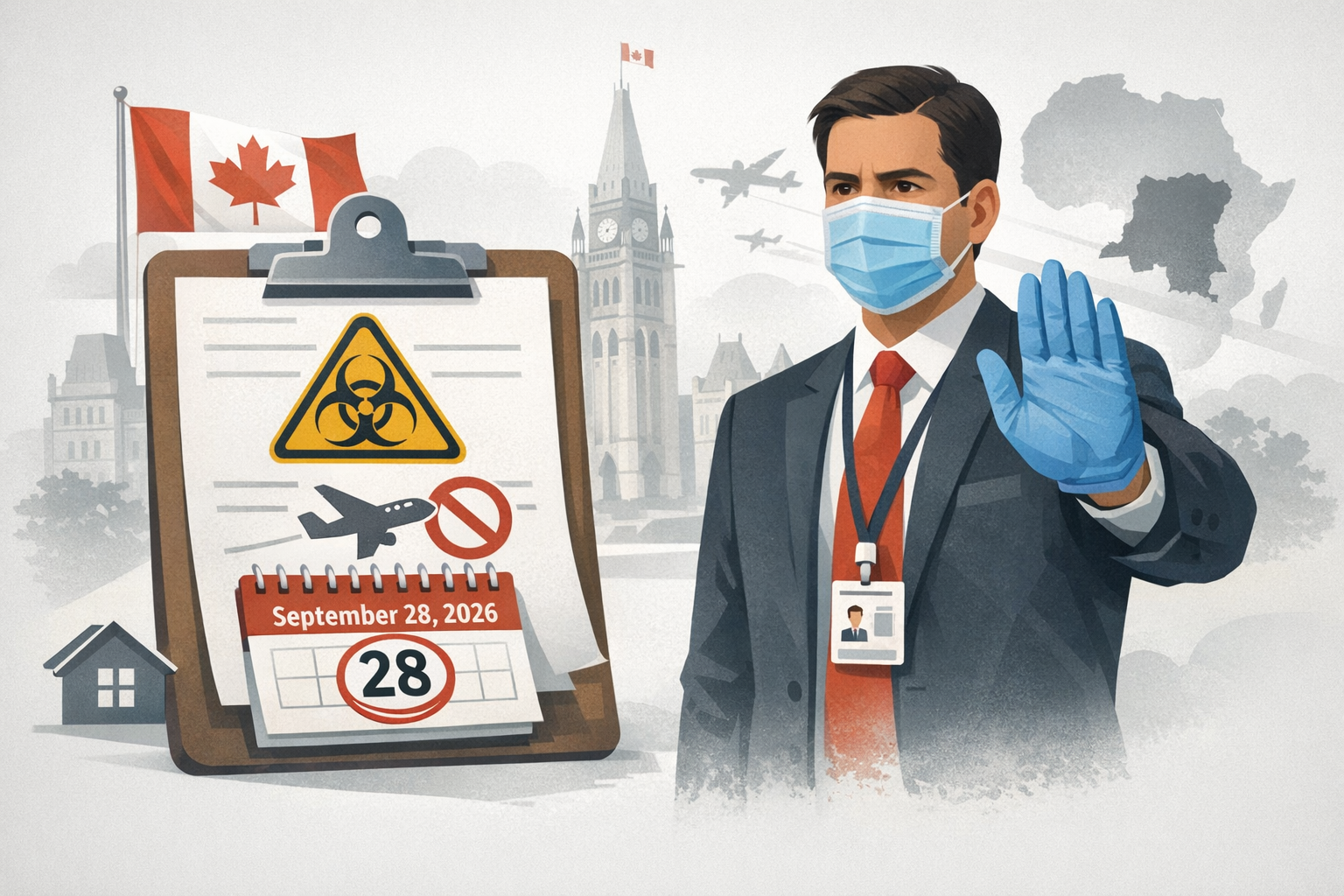
Canada extends Ebola measures
Canada extended Ebola travel measures to Sept. 28, 2026; effective July 20, 2026, foreign nationals who were in the DRC within the previous 21 days cannot board flights to Canada. Affects TRV, Work Permit and Study Permit travellers and may disrupt travel, enrolment and onboarding timelines.
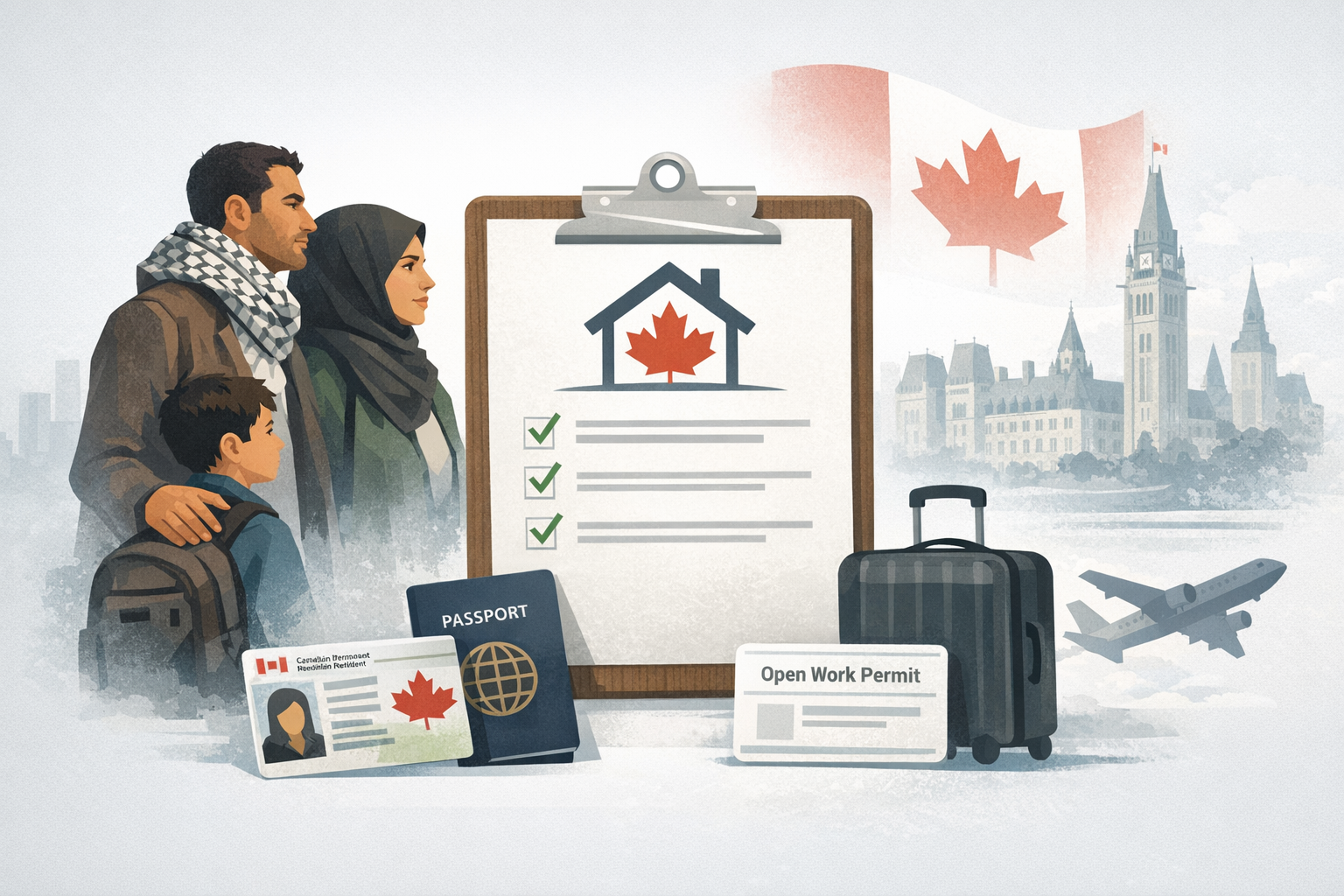
Palestinian Open Work Permits
Canada launches a temporary public policy (Aug 1, 2026–Dec 30, 2027) allowing Palestinians and eligible family members in Canada to apply for or extend open work permits (one-time extension). Policy is in-Canada only, excludes temporary resident permit holders, requires valid temporary status, standard fees apply—use IRCC’s online tool and apply promptly.