
Effective March 31, 2026, Canada will allow hosts to meet the Parents and Grandparents Super Visa income requirement using either of the two taxation years before application and to include the visiting parent/grandparent’s income to cover any shortfall. The change applies to applications submitted or in process on/after that date and aims to improve accessibility while maintaining financial safeguards.
Soheil Hosseini
March 20, 2026
Jurisdiction
Federal
Week
Week 12
Impact
Moderate
Programs Affected
Canada changes super visa income rules effective March 31, 2026, allowing two-year assessment and inclusion of visitor income
Summary: Canada will modify how income is calculated for the Parents and Grandparents Super Visa, allowing a two-year assessment window and the addition of the visiting parent/grandparent’s income to meet the threshold. The change aims to improve accessibility while maintaining financial safeguards. Date of update: 2026-03-20. Ottawa — 2026-03-20 — Canada announced changes to the Parents and Grandparents Super Visa income assessment that will take effect on 2026-03-31, intended to make the program more equitable and accessible while preserving the requirement that visiting family members are financially supported. The Super Visa allows extended visits by parents and grandparents of Canadian citizens and permanent residents. Under the revised rules, the host in Canada (and co‑signer, if any) will have two new flexibilities to meet income requirements:
- Two-year income assessment: Hosts may meet or exceed the required income in either of the two taxation years preceding the application, rather than only the immediately prior year.
- Add visitor’s income: If the host (and co‑signer, if applicable) already meets the required minimum percentage of income, the visiting parent/grandparent’s income may be added to cover the remaining shortfall. As of 2026-03-31, all applications already in processing or submitted on/after that date will be assessed under the new criteria. Families previously eligible will continue to qualify. Applicants seeking to use the new alternatives must provide documentation supporting income for their family size. Independent analysis:
- Positive impacts: The two-year lookback can reduce refusals for families with fluctuating annual income, and including the visitor’s income may broaden access for multi‑generational households with globally distributed earnings, supporting family reunification without expanding permanent admissions.
- Potential downsides: Allowing visitor income could introduce verification complexity (foreign income documentation, currency and tax validation) and may increase processing times during transition. There is also a policy trade‑off: easing temporary family entry while aiming to keep overall immigration at “sustainable levels” may require careful capacity planning to avoid backlogs.
- Operational note: Applying new rules to files already in process may necessitate supplementary document requests, which could temporarily affect adjudication timelines.
Programs affected: TRV; Sponsorship (context: family programs and financial support obligations). Source: News Article. This update underscores Canada’s attempt to balance sustainable immigration levels with practical measures that keep families together.
Tags: Canada immigration, Super Visa, Parents and Grandparents, IRCC policy, income requirement, two-year assessment, visitor income inclusion, TRV, family reunification, immigration update 2026, Ottawa, processing changes
Categories
Share This Post
Stay Updated with Immigration News
Get the latest updates on Express Entry draws, OINP invitations, policy changes, and more delivered to your inbox.
We respect your privacy. Unsubscribe at any time.
Related Articles

IRCC genuineness guidance
IRCC requires officers to assess genuineness of LMIA‑exempt employer‑specific work‑permit offers under R200/R209.11—refusal is mandatory if any of four factors (active engagement, need, ability to fulfill terms, legal compliance) fail; open work permits are excluded. Employers must submit complete offers via the Employer Portal and may be contacted directly; CBSA conducts genuineness checks at POE and extrinsic adverse info triggers procedural fairness.

Canada extends Ebola measures
Canada extended Ebola travel measures to Sept. 28, 2026; effective July 20, 2026, foreign nationals who were in the DRC within the previous 21 days cannot board flights to Canada. Affects TRV, Work Permit and Study Permit travellers and may disrupt travel, enrolment and onboarding timelines.
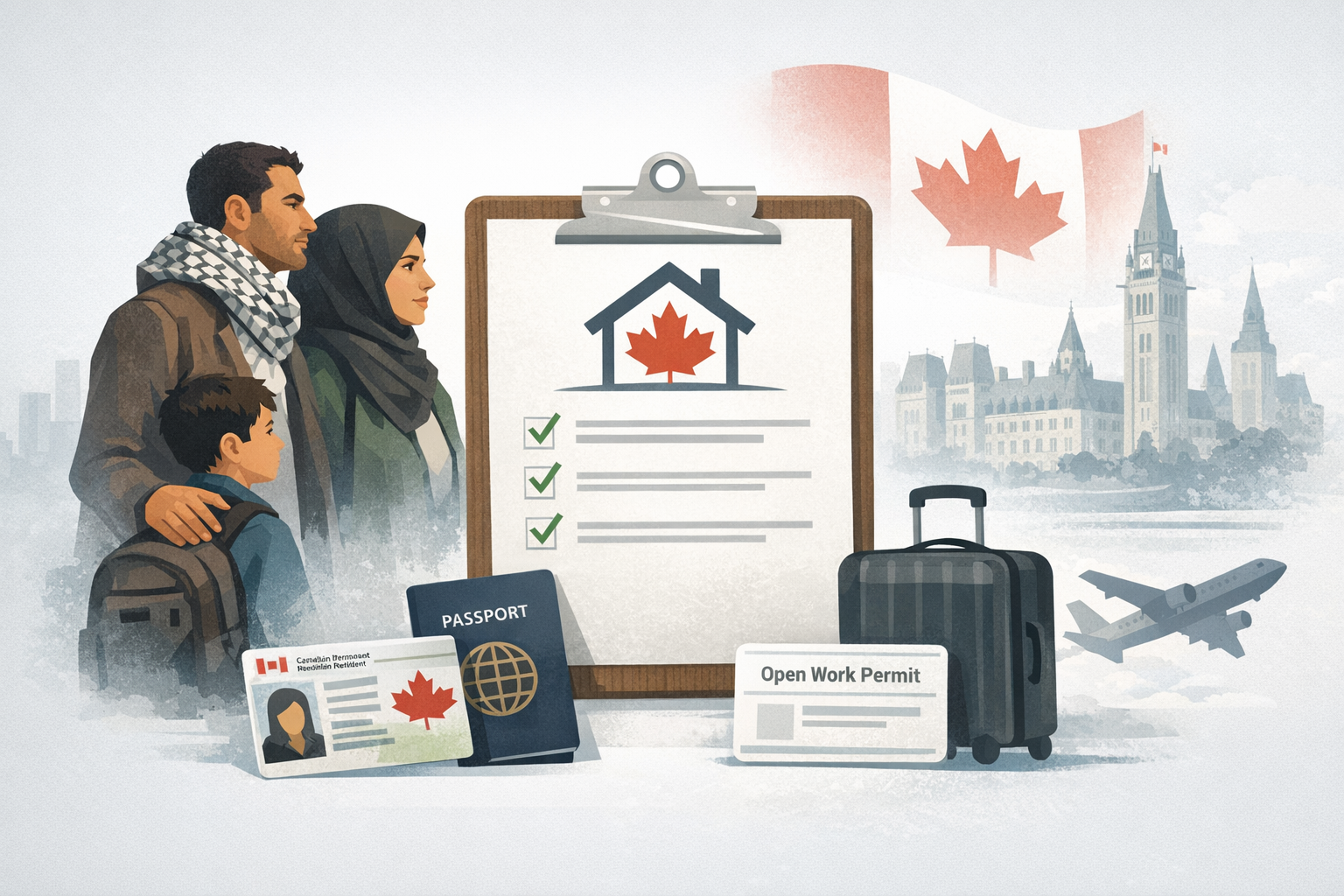
Palestinian Open Work Permits
Canada launches a temporary public policy (Aug 1, 2026–Dec 30, 2027) allowing Palestinians and eligible family members in Canada to apply for or extend open work permits (one-time extension). Policy is in-Canada only, excludes temporary resident permit holders, requires valid temporary status, standard fees apply—use IRCC’s online tool and apply promptly.

Philippines-Canada Declaration
Philippines and Canada signed a non-binding Joint Declaration of Intent (Vancouver, 2 Jul 2026) to strengthen ethical recruitment and migrant worker protections, aligned with ILO fair recruitment principles. Key commitments: no recruitment fees to workers, transparent licensing/verification, protection from passport/contract confiscation, freedom of movement, and access to information and grievance mechanisms. Impact depends on domestic enforcement; Filipino jobseekers should avoid paying fees and secure contracts, while employers must review fee, licensing, and document-handling practices.