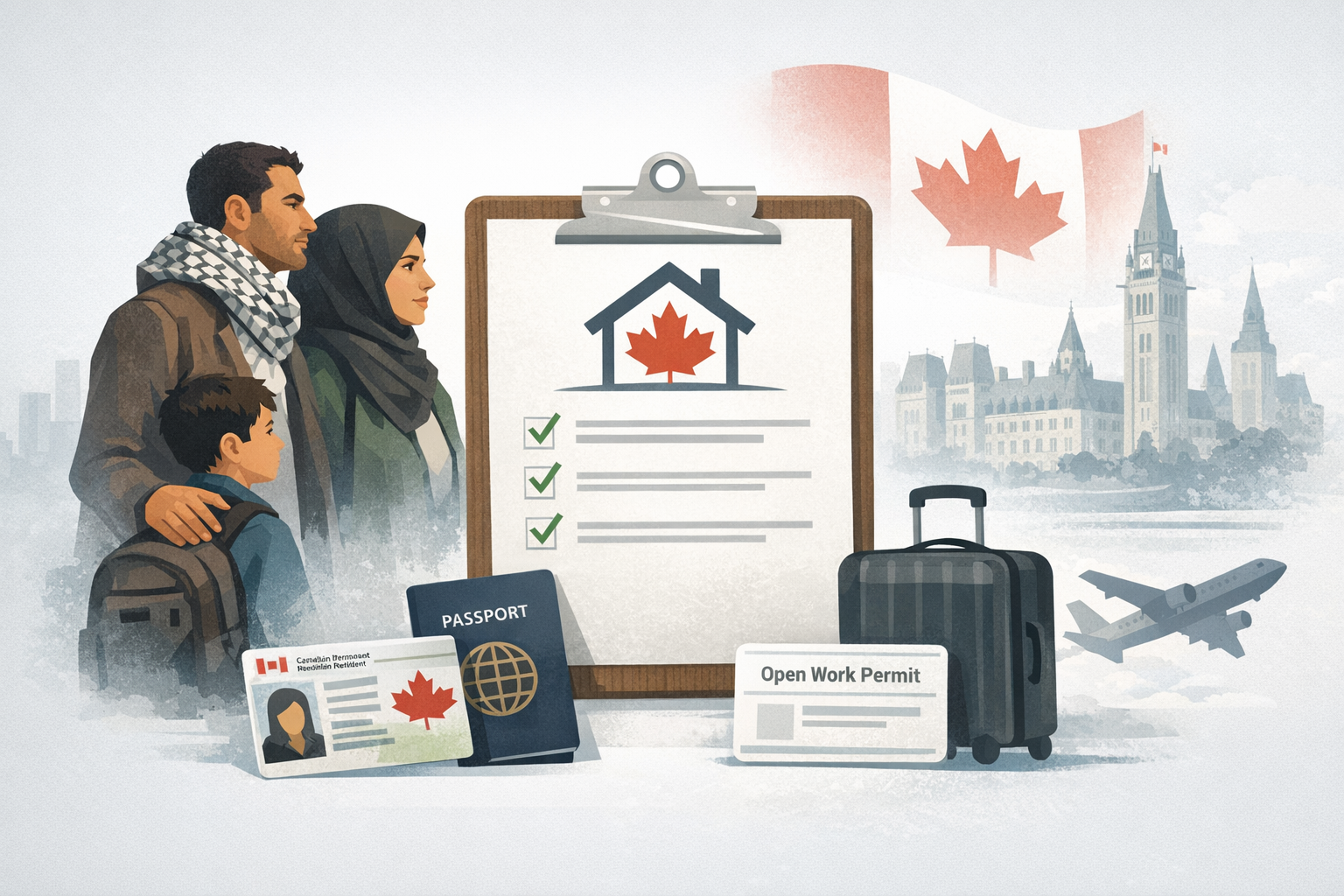
Canada launches a temporary public policy (Aug 1, 2026–Dec 30, 2027) allowing Palestinians and eligible family members in Canada to apply for or extend open work permits (one-time extension). Policy is in-Canada only, excludes temporary resident permit holders, requires valid temporary status, standard fees apply—use IRCC’s online tool and apply promptly.
Soheil Hosseini
July 31, 2026
Jurisdiction
Federal
Week
Week 31
Impact
Moderate
Programs Affected
Canada launches temporary public policy allowing Palestinians and eligible family members in Canada to apply for or extend open work permits from Aug 1, 2026 to Dec 30, 2027
Summary: Canada has extended in-Canada immigration measures for Palestinians and eligible family members, allowing applications for new or extended open work permits between 2026-08-01 and 2027-12-30, with standard fees and specific eligibility rules. Source: IRCC; Date of update: 2026-07-31. Canada has introduced a new temporary public policy that keeps humanitarian immigration measures in place for Palestinians and eligible family members who are already in Canada. The policy runs from 2026-08-01 to 2027-12-30, bridging the measures that expired on 2026-07-31. Source: IRCC
Date of update: 2026-07-31
Program affected: Work Permit, TRV Under the policy, eligible individuals in Canada may apply to extend an open work permit issued under prior Palestinian public policies. IRCC also indicates that individuals who have not previously applied under those policies may be able to apply under the new public policy, subject to eligibility. Eligibility highlights (extension pathway):
- You hold a Palestinian passport/travel document issued by the State of Palestine; you are in Canada with valid temporary resident status (excluding temporary resident permit holders); you have a valid open work permit issued under a Palestinian public policy; you are in Canada when you apply and when a decision is made; and this is your first extension under the new policy. You can extend once under this policy.
- Or, you are a foreign national family member of a Canadian citizen or permanent resident, you and that family member left Palestine on or after 2023-10-07, you are in Canada with valid temporary resident status (excluding temporary resident permit holders), you hold a valid open work permit issued under a Palestinian public policy, you are in Canada at application and decision, and this is your first extension under the new policy. You can extend once under this policy. Family member definition: spouse or common-law partner; dependent child (yours, your spouse’s or common-law partner’s); or a dependent child of a dependent child. Application notes:
- Standard application fees apply.
- IRCC directs applicants to its online “Tell us about your situation” tool to confirm eligibility and obtain application steps.
- Information on the measures that expired 2026-07-31 remains available for reference. Background public policies referenced by IRCC include measures signed on 2023-12-16, 2024-03-07, 2024-06-11 (extensions), and 2025-07-31 addressing Palestinians and certain family members in Canada. Independent analysis
- Positive impacts: The extension provides continuity of status and work authorization, reducing disruptions for affected Palestinians and eligible family members in Canada. A one-time extension under a clear timeframe offers short-term labor market stability and humanitarian relief.
- Limitations/risks: The policy is in-Canada only and excludes temporary resident permit holders, narrowing access. The one-time extension cap may create a status cliff after 2027-12-30 unless further measures are introduced. Processing volumes could rise, and applicants must maintain valid temporary resident status throughout.
- Practical takeaway: Eligible holders of open work permits issued under prior policies should apply promptly within the window and monitor IRCC updates regarding post-2027 options. For full eligibility details and how to apply, consult IRCC.
Closing: The measures take effect on 2026-08-01. Eligible individuals should review IRCC guidance and submit applications in time to maintain lawful status and work authorization.
Tags: Canada immigration, IRCC, Palestinians, open work permit, temporary public policy, work permit extension, TRV, humanitarian measures, family reunification, Gaza crisis, in-Canada applications, 2026 immigration updates
Categories
Share This Post
Stay Updated with Immigration News
Get the latest updates on Express Entry draws, OINP invitations, policy changes, and more delivered to your inbox.
We respect your privacy. Unsubscribe at any time.
Related Articles
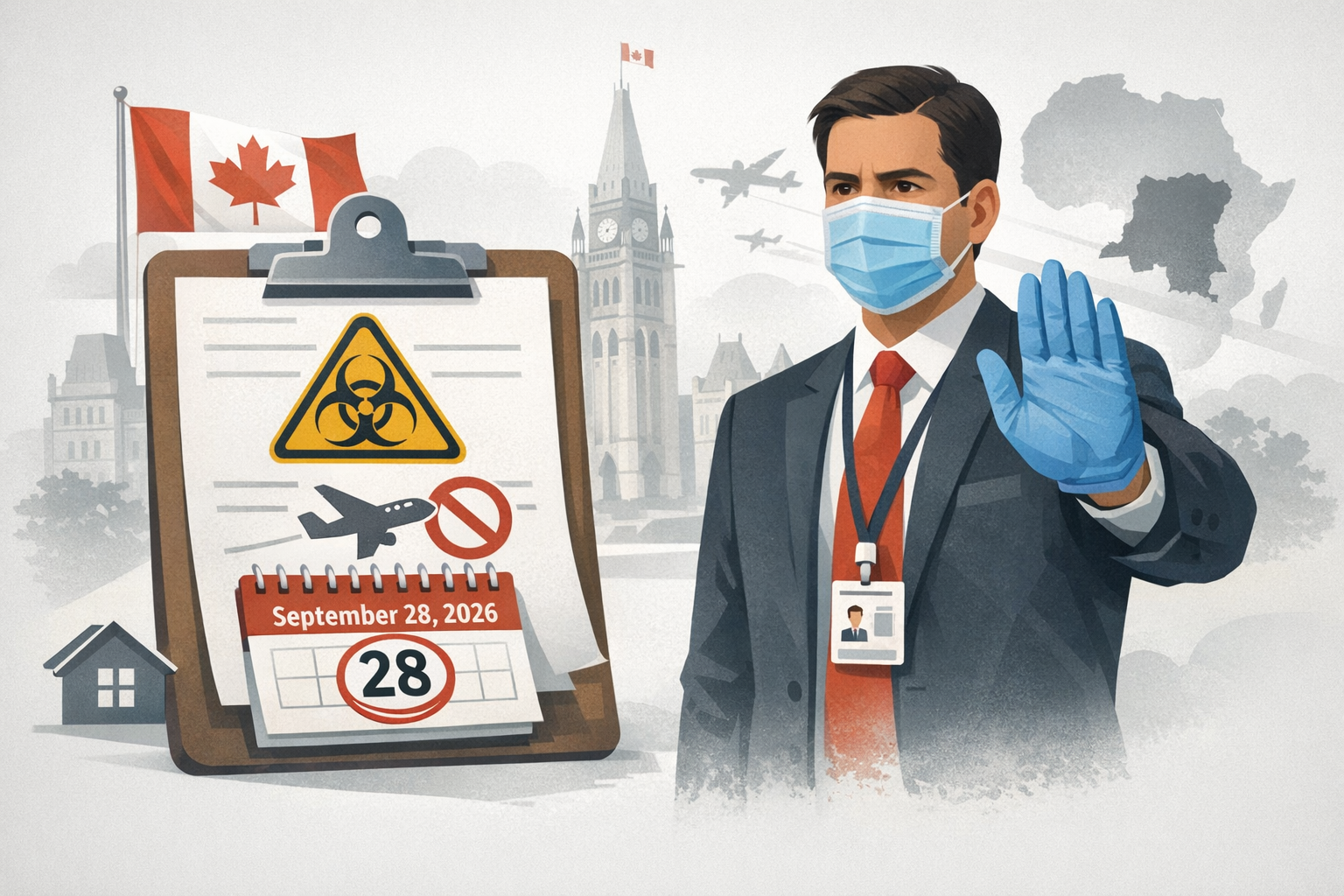
Canada extends Ebola measures
Canada extended Ebola travel measures to Sept. 28, 2026; effective July 20, 2026, foreign nationals who were in the DRC within the previous 21 days cannot board flights to Canada. Affects TRV, Work Permit and Study Permit travellers and may disrupt travel, enrolment and onboarding timelines.

Philippines-Canada Declaration
Philippines and Canada signed a non-binding Joint Declaration of Intent (Vancouver, 2 Jul 2026) to strengthen ethical recruitment and migrant worker protections, aligned with ILO fair recruitment principles. Key commitments: no recruitment fees to workers, transparent licensing/verification, protection from passport/contract confiscation, freedom of movement, and access to information and grievance mechanisms. Impact depends on domestic enforcement; Filipino jobseekers should avoid paying fees and secure contracts, while employers must review fee, licensing, and document-handling practices.

Study Permit Policy Gap
Canada’s shift to permits listing a specific DLI, level and program may conflict with IRPR subsection 219(2), which lets dependent children obtain study permits without an acceptance letter or named institution. The resulting legal-administrative gap creates uncertainty and compliance risk for students and schools and calls for IRCC guidance or regulatory clarification.

OINP Regulation Overhaul
Ontario amended Regulation 421/17 effective 30-May-2026, removing the regulation’s fixed list of OINP streams and shifting to a more flexible, invitation/NOI-driven framework; the OINP continues. Applicants and employers should expect program redesigns, greater emphasis on employer-supported filings, short-term uncertainty, and must follow OINP portal updates over legacy webpages.