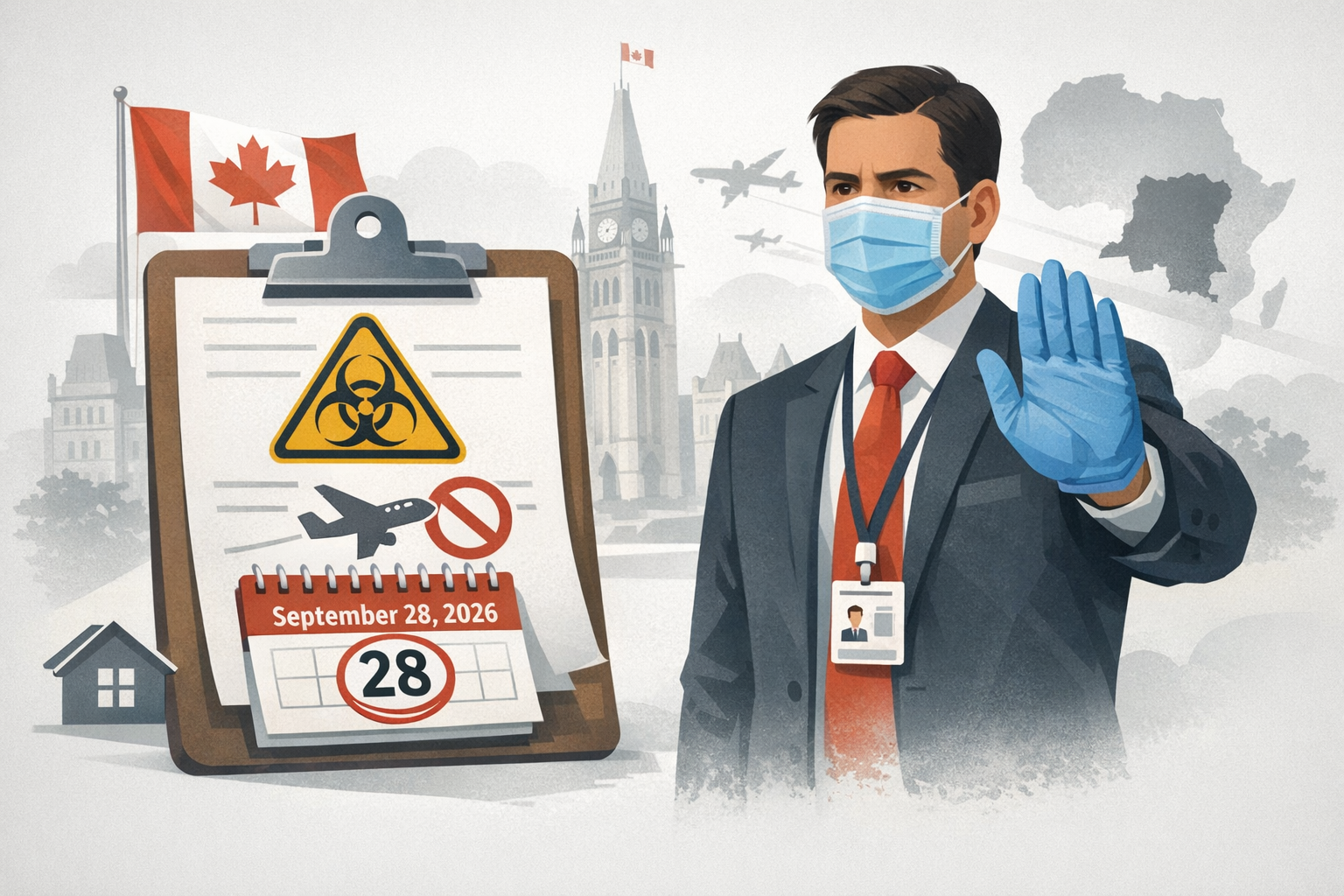
Canada extended Ebola travel measures to Sept. 28, 2026; effective July 20, 2026, foreign nationals who were in the DRC within the previous 21 days cannot board flights to Canada. Affects TRV, Work Permit and Study Permit travellers and may disrupt travel, enrolment and onboarding timelines.
Soheil Hosseini
August 28, 2026
Jurisdiction
Federal
Week
Week 35
Impact
Moderate
Programs Affected
Canada extends Ebola travel measures to Sept. 28, 2026, bars foreign nationals who were in DRC within past 21 days
Summary: Canada has extended its Ebola-related travel measures to 2026-09-28. Effective 2026-07-20, foreign nationals who have been in the Democratic Republic of the Congo within the previous 21 days are prohibited from boarding flights to Canada, affecting TRV, Work Permit, and Study Permit travelers.
Date of update: 2026-08-28
Source: News Article Canada has extended its temporary Ebola travel measures until 2026-09-28, maintaining heightened controls on air travel linked to Ebola-affected areas. Key updates:
- Measure extended to 2026-09-28.
- Since 2026-07-20, foreign nationals who have been in the Democratic Republic of the Congo (DRC) within the past 21 days cannot board a flight to Canada.
- Programs affected: Temporary Resident Visa (TRV), Work Permit, Study Permit. Implications and analysis:
- Public health: The extension is likely to be viewed as a precautionary step to mitigate importation risk of Ebola, supporting health system readiness.
- Travelers and institutions: International students, temporary workers, and visitors with recent presence in the DRC may face deferrals, itinerary changes, or missed start dates, even if their visas/permits are approved. Planning around the 21-day lookback period becomes critical.
- Employers and schools: Onboarding and enrollment timelines may need flexibility, with potential impacts on labor availability and academic intake schedules.
- Airlines and compliance: Carriers will need to continue enforcing pre-boarding checks tied to recent travel history, which may lead to denied boarding and rebooking for non-compliant itineraries.
Closing: Stakeholders should align travel plans with the 21-day requirement through 2026-09-28 and monitor official channels for any further adjustments to these measures.
Tags: Canada immigration, Ebola, DRC, travel restrictions, TRV, Work Permit, Study Permit, public health, border measures, 2026
Categories
Share This Post
Stay Updated with Immigration News
Get the latest updates on Express Entry draws, OINP invitations, policy changes, and more delivered to your inbox.
We respect your privacy. Unsubscribe at any time.
Related Articles

IRCC genuineness guidance
IRCC requires officers to assess genuineness of LMIA‑exempt employer‑specific work‑permit offers under R200/R209.11—refusal is mandatory if any of four factors (active engagement, need, ability to fulfill terms, legal compliance) fail; open work permits are excluded. Employers must submit complete offers via the Employer Portal and may be contacted directly; CBSA conducts genuineness checks at POE and extrinsic adverse info triggers procedural fairness.
Palestinian Open Work Permits
Canada launches a temporary public policy (Aug 1, 2026–Dec 30, 2027) allowing Palestinians and eligible family members in Canada to apply for or extend open work permits (one-time extension). Policy is in-Canada only, excludes temporary resident permit holders, requires valid temporary status, standard fees apply—use IRCC’s online tool and apply promptly.

Philippines-Canada Declaration
Philippines and Canada signed a non-binding Joint Declaration of Intent (Vancouver, 2 Jul 2026) to strengthen ethical recruitment and migrant worker protections, aligned with ILO fair recruitment principles. Key commitments: no recruitment fees to workers, transparent licensing/verification, protection from passport/contract confiscation, freedom of movement, and access to information and grievance mechanisms. Impact depends on domestic enforcement; Filipino jobseekers should avoid paying fees and secure contracts, while employers must review fee, licensing, and document-handling practices.

Study Permit Policy Gap
Canada’s shift to permits listing a specific DLI, level and program may conflict with IRPR subsection 219(2), which lets dependent children obtain study permits without an acceptance letter or named institution. The resulting legal-administrative gap creates uncertainty and compliance risk for students and schools and calls for IRCC guidance or regulatory clarification.