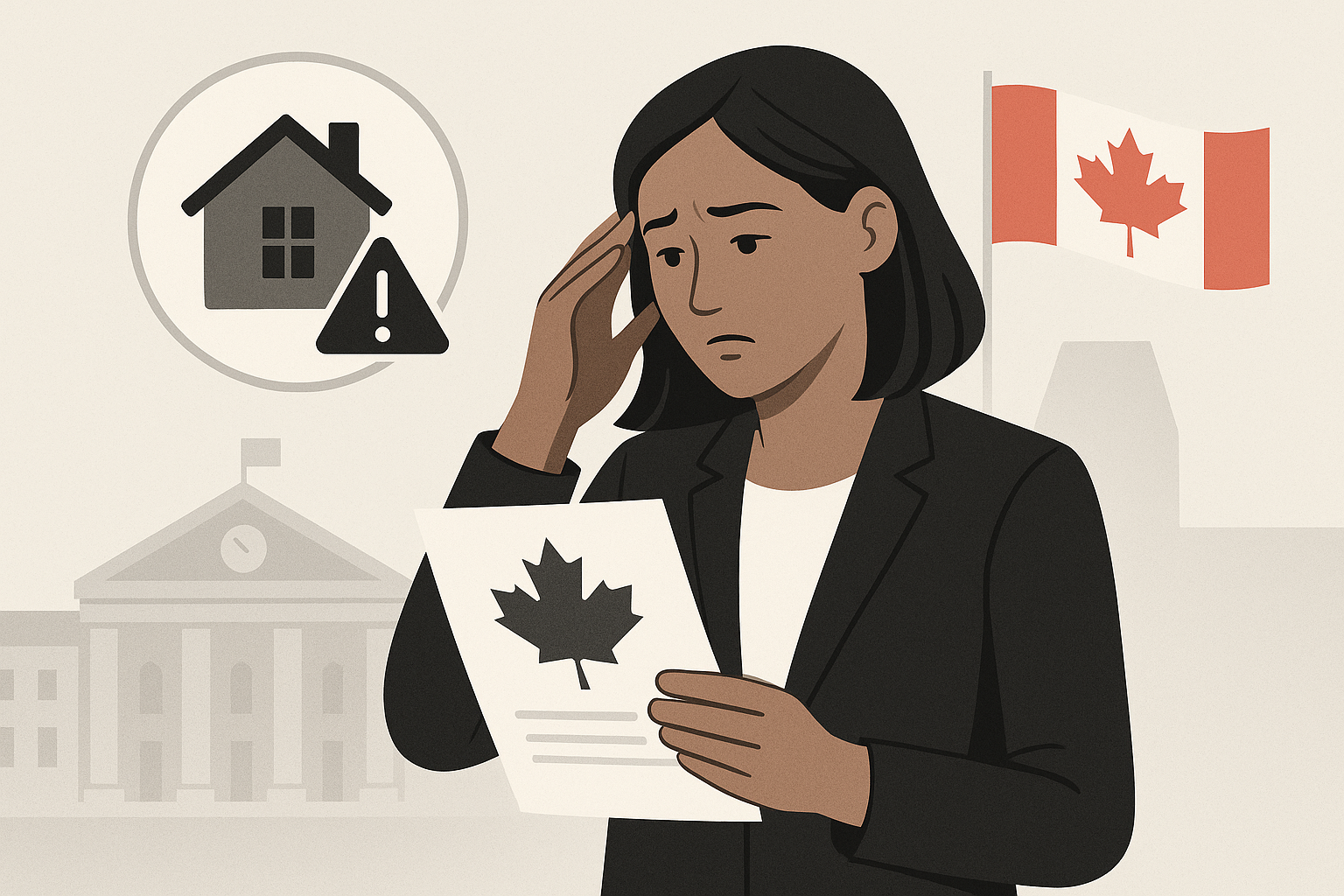
IRCC updated guidance clarifying s.10(1) revocation grounds (fraud, false representation, concealment), investigative/decision steps and timelines, with Federal Court as the default decision‑maker unless the individual elects Ministerial review. Guidance mandates consideration of personal circumstances—including children’s best interests and statelessness—details status during proceedings, renunciation limits, post‑revocation consequences and a 10‑year bar to reapply.
Soheil Hosseini
March 5, 2026
Jurisdiction
Federal
Week
Week 10
Impact
Moderate
Programs Affected
IRCC updates guidance on citizenship revocation, clarifying grounds, process and protections
Summary: IRCC has published updated operational guidance on revoking Canadian citizenship, detailing the legal grounds, step‑by‑step procedures, decision‑making pathways, and safeguards—especially regarding personal circumstances, the best interests of affected children, and statelessness.
Date of update: 2026-03-05 | Source: IRCC (Operational instructions and guidelines: Citizenship – Revocations) In a 2026-03-05 update, Immigration, Refugees and Citizenship Canada (IRCC) refined its public-facing guidance on citizenship revocation. The update reiterates that citizenship may be revoked under subsection 10(1) of the Citizenship Act when obtained by false representation, fraud, or knowingly concealing material facts, and it consolidates how cases are investigated, decided, and reviewed, including procedural timelines and the treatment of personal circumstances. Key takeaways
- Grounds for revocation: False representation, fraud, or knowingly concealing material facts (Citizenship Act, s.10(1)).
- Decision-maker: By default, the Federal Court decides revocation cases; individuals may request that the Minister decide instead (post–Bill C-6 model in force since 2018-01-24).
- Procedural steps: Initial investigation by IRCC’s Major Investigations Unit; non-statutory Request for Information letter (30 days to respond); formal Notification letter (60 days to provide submissions and elect Minister vs. Federal Court).
- Personal circumstances and safeguards: Decision-makers must consider written representations, including the best interests of a child directly affected and potential statelessness, on a balance of probabilities.
- Timelines and review: If proceeding to Federal Court, the Minister’s delegate issues a written decision on personal circumstances before referral. Individuals generally have 30 days to seek leave and judicial review. Files are referred to Litigation Management Branch after 45 days from that decision.
- Status during proceedings: A person remains a citizen until revocation. If the Minister is the decision-maker, filing for judicial review does not preserve citizenship status. If the Federal Court is the decision-maker, a judge of the Federal Court of Appeal may stay the Court’s decision, allowing the person to remain a citizen pending appeal.
- Renunciation limits: An individual cannot renounce after receiving a Notification letter or once a Federal Court action is commenced; any pending renunciation is suspended until the revocation matter is decided.
- Post-revocation status: Individuals may revert to permanent resident, foreign national, or foreign national with protected person status, depending on how citizenship was obtained. If misrepresentation occurred only during the citizenship process, the person reverts to permanent resident and must meet IRPA residency obligations (5-year period starts on revocation date). Serious IRPA violations (A34, A35, A37) may trigger a Federal Court inadmissibility declaration and an immediate deportation order.
- Future eligibility: A 10-year bar applies to reapplying for citizenship after revocation for misrepresentation (Citizenship Act, s.22(1)(f)); resumption under s.11(1) is not available. Context and process details
- Historical framework:
- Pre–May 28, 2015: Three-step process (Minister, Federal Court if requested, Governor in Council).
- Bill C-24 (2015): Minister finalized straightforward fraud cases; Federal Court handled security/rights/organized crime cases; GIC role removed (except transitional).
- Bill C-6 (2017; in force 2018-01-24): Federal Court became the default decision-maker; individuals can request Ministerial decision in all case types.
- Evidence and investigation: The Major Investigations Unit coordinates with enforcement partners (RCMP, CBSA). Security-related files may be assessed by the Security Case Management Division. Findings go to the Complex Cases Management Division for decisions on proceeding.
- Hearings: For Minister-decided cases, an oral hearing may be held where credibility issues or an inability to provide written submissions arise (Citizenship Regulations, s.7.2).
- Delivery of notices: Requests for Information, revocation notices, and decisions may be delivered by hand, mail, or electronic means (Citizenship Regulations, No. 2, s.17). Independent analysis
- Positive impacts:
- Clarity and transparency: Consolidated timelines, roles, and evidentiary standards increase procedural predictability for counsel and affected persons.
- Safeguard emphasis: Explicit consideration of the best interests of directly affected children and statelessness supports proportionate, rights-conscious outcomes.
- Integrity of citizenship: Clear pathways for addressing misrepresentation deter fraud and protect program credibility.
- Potential concerns:
- Personal circumstances at Federal Court: The Federal Court does not consider personal circumstances in the revocation action; these must be weighed by the Minister’s delegate beforehand, potentially fragmenting the assessment and raising strategy complexity.
- Status consequences: The rule that judicial review of a Minister’s revocation does not preserve citizenship may create abrupt status loss absent a successful challenge, increasing vulnerability during litigation.
- Long-term effects: The 10-year bar, coupled with possible reversion to foreign national status and IRPA enforcement, imposes significant, extended consequences that may disproportionately impact families and protected persons in edge cases.
Programs affected: Citizenship; Enforcement; Refugees Urgency: Important
Tags: IRCC, Canadian citizenship revocation, Citizenship Act s.10(1), Bill C-6, Bill C-24, Federal Court, Ministerial decision, personal circumstances, best interests of the child, statelessness, misrepresentation, fraud, IRPA A34 A35 A37, inadmissibility, deportation order, Litigation Management Branch, Major Investigations Unit, Complex Cases Management Division, Security Case Management Division, RCMP, CBSA, judicial review, 10-year bar This update strengthens the integrity framework around Canadian citizenship while providing clearer guardrails and opportunities for written representations, helping both applicants and counsel navigate revocation proceedings with greater certainty.
Categories
Share This Post
Stay Updated with Immigration News
Get the latest updates on Express Entry draws, OINP invitations, policy changes, and more delivered to your inbox.
We respect your privacy. Unsubscribe at any time.
Related Articles

Citizenship Checklist Update
IRCC updated citizenship document checklists (CIT 0007 for adults, CIT 0008 for minors; last updated June 2026). Applicants and representatives should download the current checklists from IRCC before filing to avoid returns or delays.
IMM 1294 & 5709
IRCC has updated IMM 1294 and IMM 5709—use the latest versions immediately to avoid application returns or processing delays. Applies to new study permit filings and in‑Canada student extensions/changes; download fresh copies from the IRCC website.

Business Visitor Eligibility
IRCC updated staff instructions clarifying business‑visitor eligibility and when work without a permit is allowed under IRPR R186(a): activities must be outside the Canadian labour market, international in scope, and paid from sources outside Canada. Guidance increases documentary burdens, confirms such experience cannot count for the Canadian Experience Class, and may affect TRV validity/entries.

IRCC medical exam update
IRCC updated its immigration medical exam guidance, explicitly classifying active pulmonary tuberculosis and untreated syphilis as dangers to public health and clarifying health‑ and safety‑related inadmissibility criteria. The guidance standardizes IME testing (syphilis/HIV blood tests 15+, chest X‑ray 11+), requires reporting/surveillance to public health, reaffirms excessive‑demand exemptions for spouses/partners, dependent children and refugees, and may cause processing delays pending treatment.