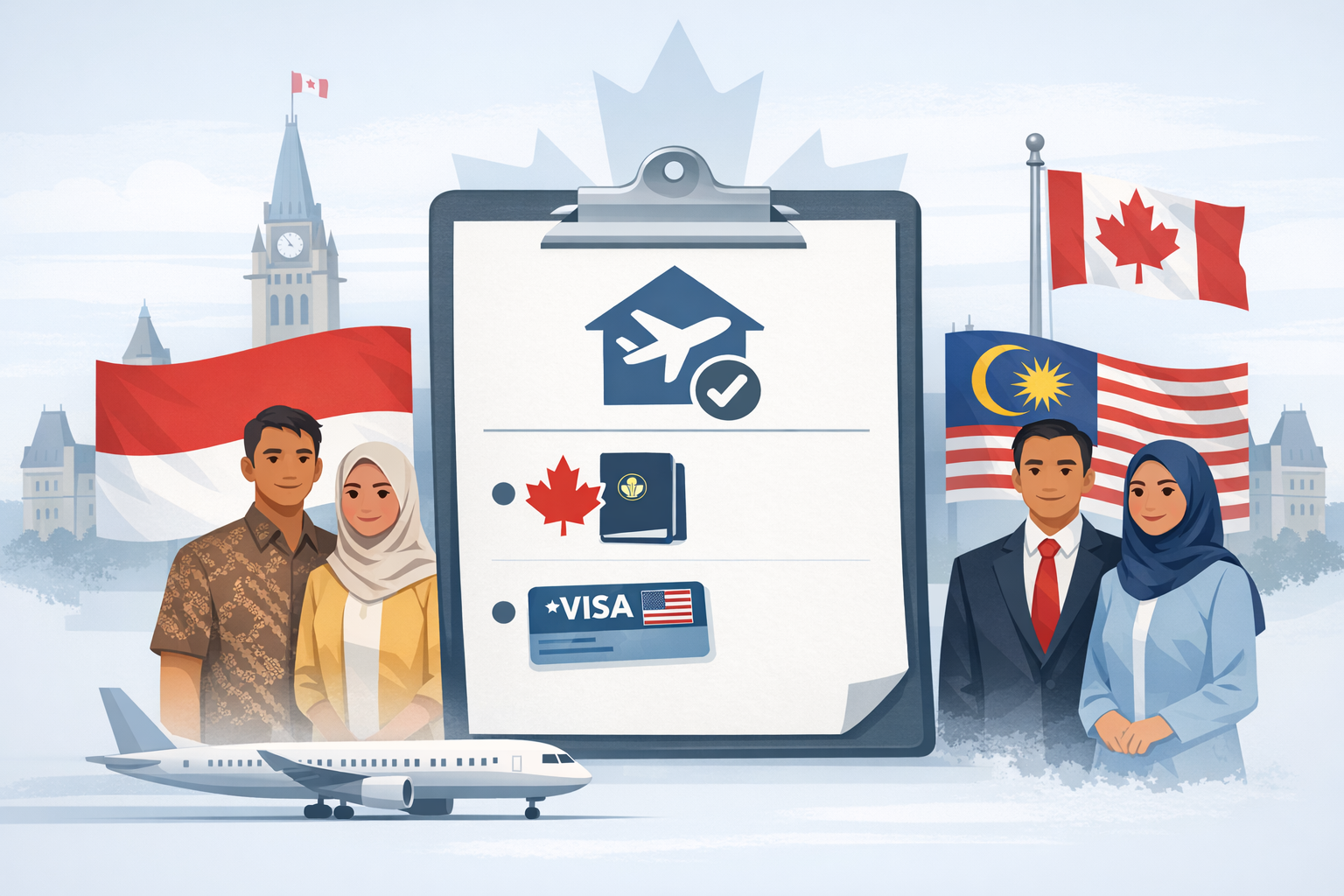
Canada added Indonesia and Malaysia to its eTA‑X program, letting certain visa‑required air travellers who held a Canadian TRV in the past 10 years or who hold a valid U.S. nonimmigrant visa apply for an eTA. Both countries remain otherwise visa‑required and the change applies to air travel only.
Soheil Hosseini
May 26, 2026
Jurisdiction
Federal
Week
Week 22
Impact
Moderate
Programs Affected
Canada Adds Indonesia and Malaysia to eTA‑X, Allowing Some Air Travellers with Past TRV or Valid U.S. Visa to Apply
Summary: Canada has added Indonesia and Malaysia to its Electronic Travel Authorization Expansion (eTA‑X) program, enabling certain citizens of these visa‑required countries to apply for an eTA for air travel if they have held a Canadian TRV in the past 10 years or hold a valid U.S. nonimmigrant visa. Both countries remain otherwise visa‑required. Date: 2026-05-26 | Source: IRCC (Program delivery update) | Program affected: TRV Canada has partially eased entry requirements for select travellers from Indonesia and Malaysia by expanding the Electronic Travel Authorization Expansion (eTA‑X) program. While Indonesia and Malaysia remain visa‑required countries, eligible citizens can now apply for an eTA when travelling to Canada by air, subject to defined criteria. Key details
- Countries added: Indonesia and Malaysia
- Program: eTA‑X (Electronic Travel Authorization Expansion)
- Mode of travel: Air only (not applicable to land or sea entries)
- Eligibility at time of application:
- Held a Canadian temporary resident visa (TRV) in the past 10 years, or
- Hold a valid U.S. nonimmigrant visa (NIV)
- Status unchanged: Travellers who do not meet eTA‑X criteria remain visa‑required Why it matters
This program delivery update, posted by IRCC as guidance to stakeholders, signals a continued use of risk‑based facilitation tools to streamline low‑risk travel while maintaining screening through the eTA system. Independent analysis
- Potential positives:
- Faster, lower‑cost travel for eligible Indonesian and Malaysian air travellers, which may support tourism, business visits, and family travel.
- Reduced TRV workload for IRCC and visa posts for repeat or U.S.‑vetted travellers.
- Operational predictability for airlines through advance eTA vetting.
- Potential challenges/limitations:
- Air‑only restriction may cause confusion for travellers planning multi‑modal itineraries; land/sea entries still require visas.
- Narrow eligibility—many applicants will still need a TRV if they lack a prior Canadian TRV or a valid U.S. NIV.
- Carrier compliance risks if documentation checks at boarding do not align with eTA‑X criteria.
- Transition issues as stakeholders update systems, training, and communications. Outlook and next steps
Stakeholders should review IRCC’s posted guidance for procedural specifics and monitor for any future country additions or operational refinements. Travellers should verify eligibility and apply for an eTA only if they meet the air‑only and TRV/U.S. NIV criteria; otherwise, a TRV remains required.
Tags: IRCC, eTA‑X, Electronic Travel Authorization, TRV, Indonesia, Malaysia, U.S. nonimmigrant visa, Canada immigration, visa policy, air travel, program delivery update, 2026-05-26
Categories
Share This Post
Stay Updated with Immigration News
Get the latest updates on Express Entry draws, OINP invitations, policy changes, and more delivered to your inbox.
We respect your privacy. Unsubscribe at any time.
Related Articles

NOC 33102 Institutional Only
OINP confirms NOC 33102 applies only to nurse-aide roles primarily performed in institutional settings (hospitals, nursing homes, assisted-care and other health establishments); home-based care must be classified as NOC 44101. Employers and applicants should update job offers, contracts and postings to the correct NOC to avoid application delays or refusals.

FMCSP Renewal Rules
On 2026-09-24 IRCC updated the Francophone Minority Communities Student Pilot, adding financial requirements for study‑permit renewals and explicitly accepting valid LOAs or other proof of continued enrolment. The guidance also clarifies extension rules for accompanying family members and confirms participants retain FMCSP designation while meeting eligibility.

90-Day Grace Period
IRCC extends concurrent processing grace period for eligible in‑Canada LMIA‑dependent work‑permit extension applications from 60 to 90 days, holding applications without decision to allow a pending LMIA (and CAQ, if required) to be issued. A new client flagging process (use tracking code CPTS2026 in the intended occupation) identifies files for concurrent processing; eligibility hinges on permit expiry window, timely LMIA filing, and LMIA validity.

IRCC A70 Guidance
IRCC standardized and reorganized R207 – A70 guidance for in‑Canada PR applicants under the International Mobility Program—new landing page, clarified instructions and consistent format. Affects protected persons, family members and H&C applicants; procedural/formatting update only, no substantive eligibility changes.